Died far from home
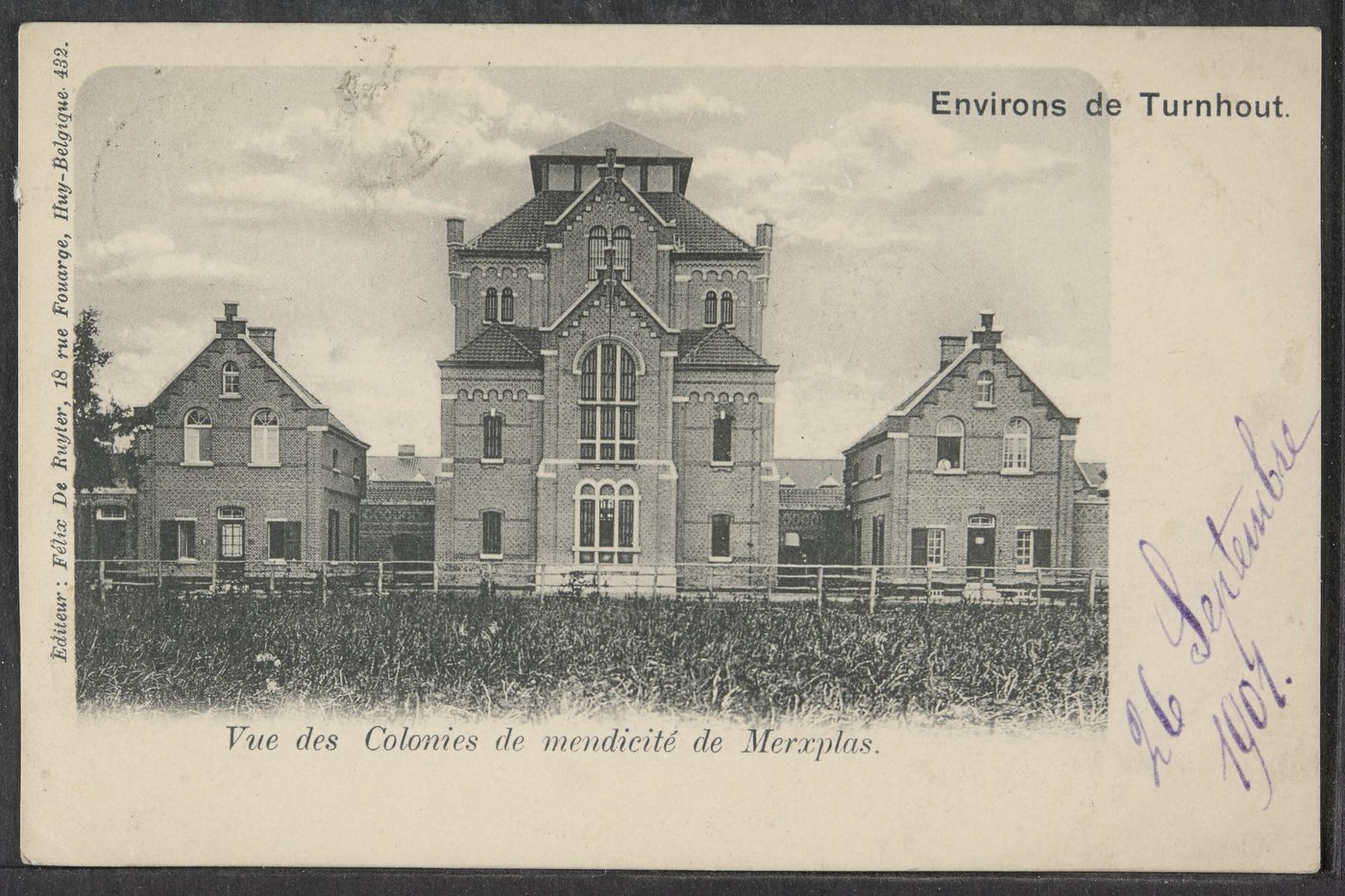
Between 1916 and 1919 the vagrants' colony of Merksplas, in Belgium, was an emergency asylum for thousands of psychiatric patients, old people and children whom the German occupier had turned out of their institutions. Hunger and cold took a heavy toll. The registers on this website keep the names of those who died there.
Why Merksplas?
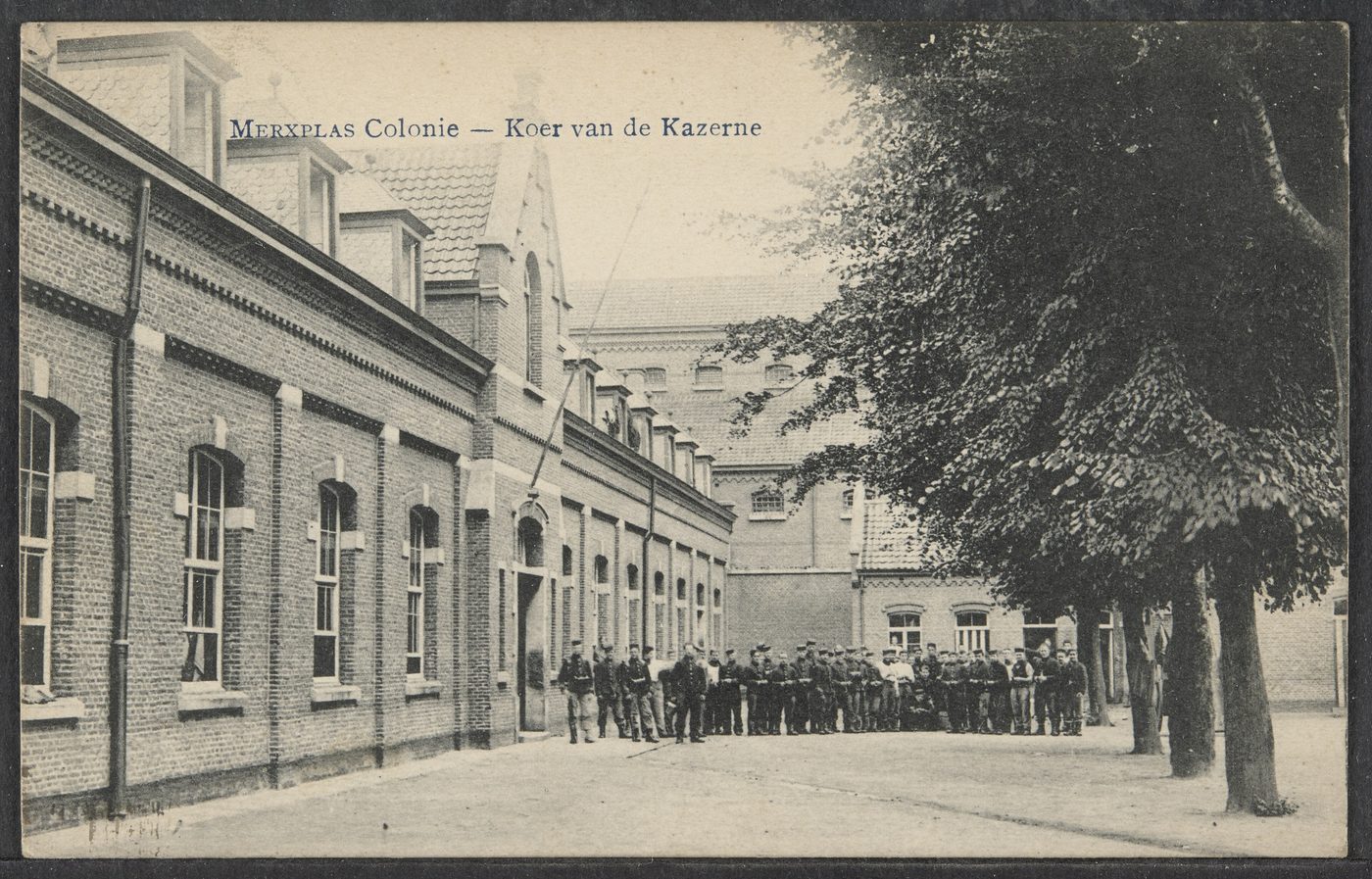
Merksplas was not a hospital. The state colony (Rijksweldadigheidskolonie) was an institution where Belgium locked up beggars and vagrants. When the war broke out the colonists were allowed to leave, and many did. That freed up room, first for Belgian war refugees, then for a very different group: the residents of asylums and hospices that the occupier had cleared.
The historians Benoît Majerus and Anne Roekens, who studied the provisioning of Belgian asylums under the occupation, call it a paradox: the institution that took in a constant flow of mentally ill Belgian and French people throughout the war was not a psychiatric institution. There was space, but little else: beds and sheets, no suitable staff, no suitable buildings.
The colony stayed under Belgian management, with Louis Stroobant as director. At the Ministry of Justice, director-general Henry Dom organised the transfers. The institutions that were cleared often brought their own nuns and brothers.
 Show the image larger
 Show the image larger
The French
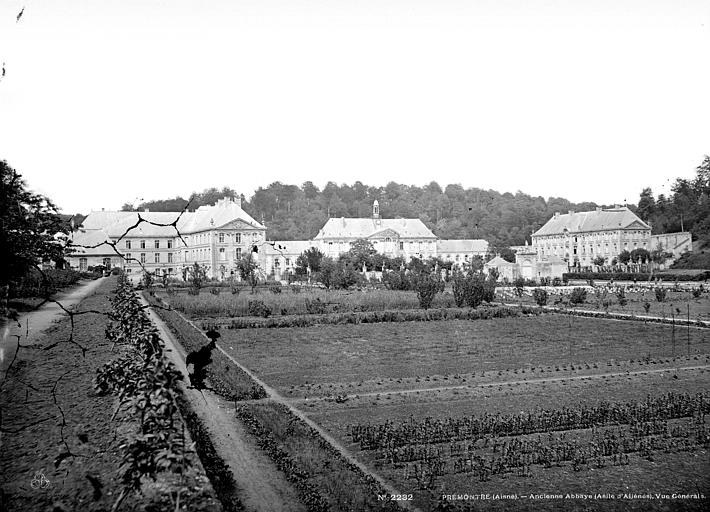
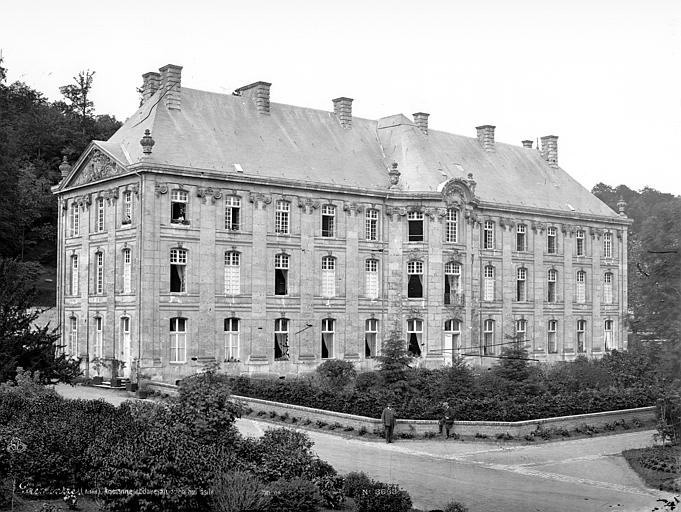
In occupied northern France the asylums lay just behind the front. In the asylum of Prémontré (Aisne), which still had 1,300 patients in August 1914, hundreds died of privation in 1915. The German authorities decided to take the patients to Belgium and put the Lille psychiatrist Georges Raviart in charge, together with a German army doctor. A first attempt in December 1915 was called off. The evacuation began in February 1916, after the prefect of the Nord had given his consent. Patients and staff had hoped to be sent to unoccupied France. They were taken to Belgium instead, to Dave near Namur and to Merksplas.
Raviart described it himself: on Saturday 26 February 1916 a train with about 150 patients left the station of Anizy-Pinon and reached Merksplas the next day. That day, 27 February 1916, is also when the register begins from which half the names on this website come.
In April the patients of the Lommelet asylum near Lille followed: 150 on 6 April and 125 on 28 April, according to the hospital's own published history, which adds that three quarters of them would die in Merksplas. On 3 December 1916 about two hundred more French patients arrived, accompanied by a German army doctor who could not give their names, let alone their diagnoses.
The registers also name the asylum of Saint-André, the Saint-Martin asylum at Origny-en-Thiérache, the Esquermes clinic in Lille and the hospices of Sedan, Maubeuge, Valenciennes, Cambrai and Saint-Quentin. We found no published source on those transports: what we know about them is in the register itself. The largest groups that arrived together are derived from it.
 Show the image larger
 Show the image larger
The Belgians
On 10 March 1917 the German authorities also ordered the Belgian state asylums and other institutions in the Etappengebiet, the zone behind the front, to be cleared: the buildings were to become military hospitals. Henry Dom worked out that the men's asylum of Tournai alone would need seven special trains. He warned the occupier in writing:
« Pour beaucoup de nos pensionnaires, ce brusque déplacement avec toutes les fatigues qu'il comporte équivalait à une condamnation à mort. »
From Bruges came the patients of three asylums. The Onze-Lieve-Vrouw psychiatric hospital at Sint-Michiels became a German naval hospital; its patients stayed in Merksplas until 1919. That is probably the St. Michiel Brugge of the burial register. At the end of 1917 the boys of the state reform school of Ruiselede followed, where the Germans were laying out an airfield: they were taken to Merksplas in cattle wagons. According to one local source, a group from the reform school of Saint-Hubert also came in 1918.
In April 1917 the colony held 4,632 people, of whom 2,923 had been evacuated from asylums. It then had more inhabitants than the village of Merksplas.
The colony of Wortel took people in as well: from 1917 to 1919 old and sick people from the hospices of Montreuil, Marle and Valenciennes stayed there. Those who died there were buried in Merksplas. That probably explains the note Wortel next to a number of names in the burial register.
Hunger and cold
The colony lived off its own farm, but who could still work? In October 1916 director Stroobant estimated that only three per cent of the population could still be put to work in the fields. In January 1917 the German potato agency demanded nearly a third of the stock. Mattresses were filled with straw or acorns, there was hardly any coal, nuns and patients gathered wood.
A Sister of Charity from Bruges wrote shortly after the war about the year 1917:
« Les colons devaient se contenter de 75 grammes de pain par jour ! La misère devint terrible : on voyait les hommes fouiller l'herbe pour y trouver quelque chose à manger. Et à mesure que le nombre de réfugiés augmentait, la ration diminuait. »
Of the winter of 1917 she wrote that there were sometimes twenty or so bodies in the mortuary in the morning. Only in January 1918 did the Antwerp provisioning committee agree to send more food.
Local texts often put the high mortality down to the Spanish flu of autumn 1918. Majerus and Roekens refute that: the deadliest winter was that of 1917 to 1918, from hunger and cold, before the flu. The register on this website shows the same: the worst month was December 1917, with 101 deaths (see the chart).
The cemetery
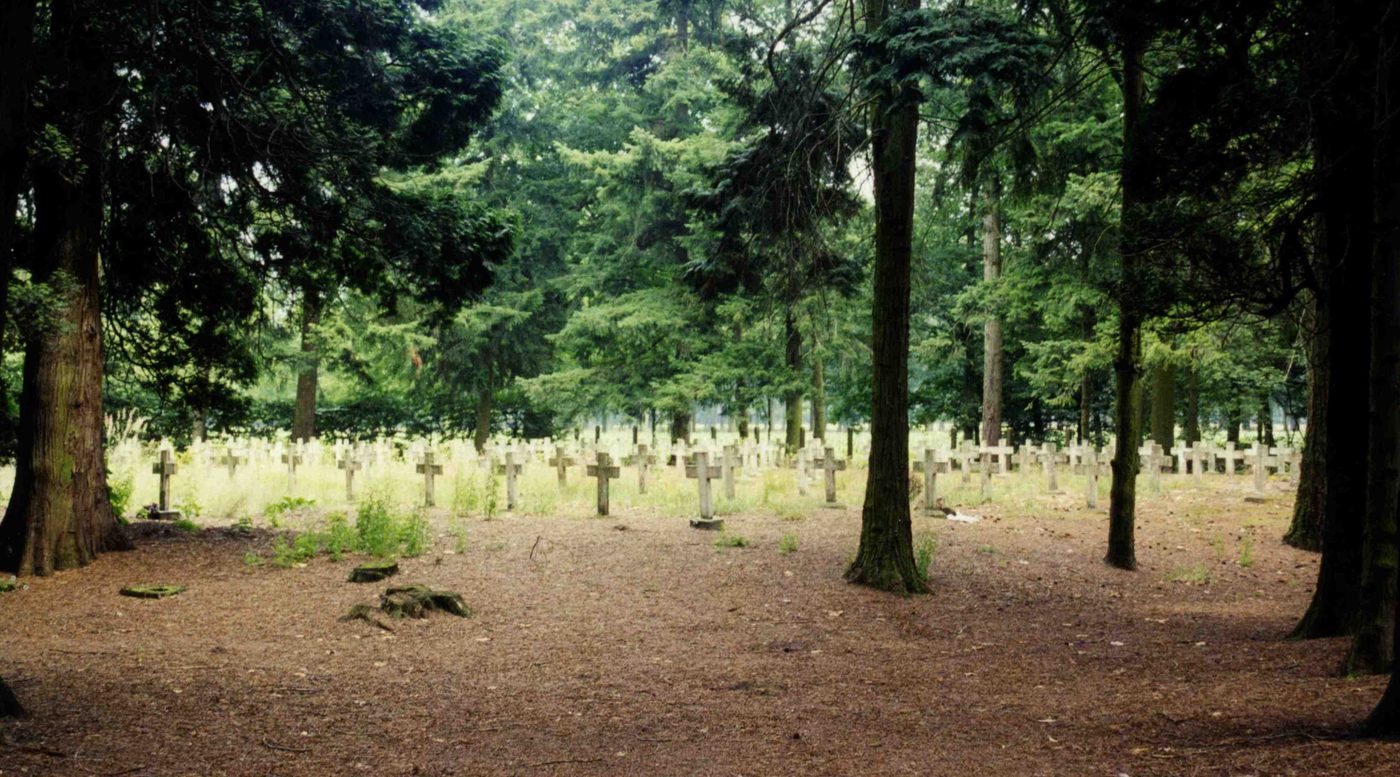
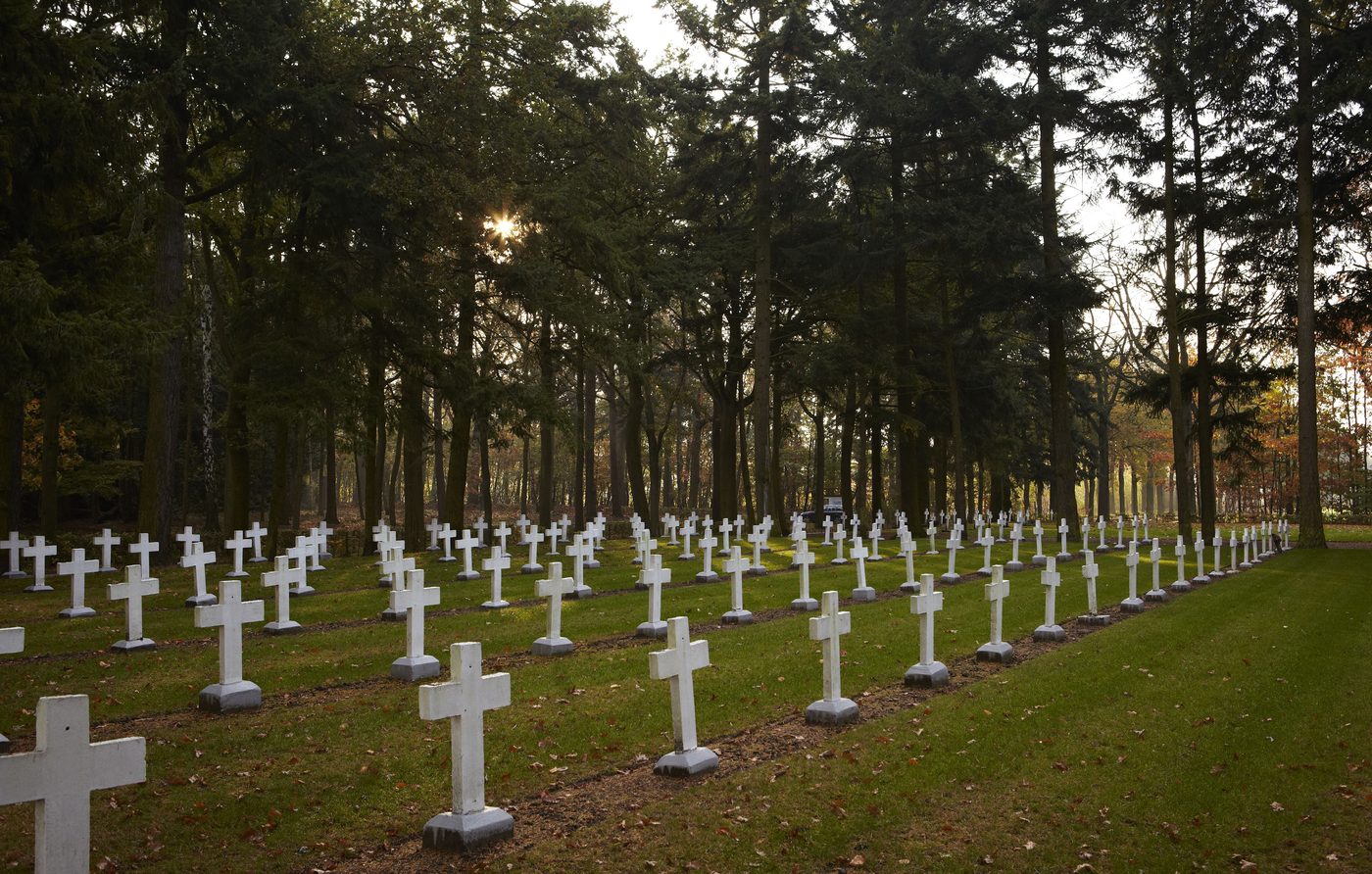
The dead were buried in the vagrants' cemetery of the colony, on the Steenweg op Wortel. According to Willy Van den Bergh, who studies the archive of the colony, a separate section there was reserved for the refugees who died, with 1,419 burials. The graves were numbered; those numbers are in the burial register and on this website.
The Flemish heritage inventory describes a plot between the Kapelstraat and the calvary, and an extension across the road, the so-called Pestkerkhof, in use from May 1918. The crosses of the time have gone. Nothing of the section can be seen today. The published sources do not tell us which plot belongs to which grave numbers.
The cemetery was restored in 2010 and is listed as built heritage. The colony and its surroundings have been protected as a historic landscape since 1999.
 Show the image larger
 Show the image larger
After the war
Most survivors from Prémontré were taken back to France through Switzerland in August 1918 and spread over asylums in the south. On 3 August 1918, for example, fifty of them arrived at the asylum of Saint-Robert near Grenoble. The Belgian institutions went home in the course of 1919.
In February 1919 the newspaper De Standaard asked on its front page about the high number of deaths among the Belgian and French patients in Merksplas, and whether officials had diverted food and clothing. In an internal report the director acknowledged the high mortality but defended himself: the prescribed rations had always been applied, and the Spanish flu was the main cause.
For a number of names the burial register notes that the body was exhumed in the years after the war. From 1921 French and Belgian families could have their dead brought home. We found no published source on the exhumations in Merksplas itself: anyone who knows more can help complete this story.
Why "refugees"?
The word dates from the time. The administration of the colony filed everyone who was not an ordinary colonist under vluchtelingen (refugees): first the Belgian civilians who fled the fighting in autumn 1914, then the evacuated residents of asylums and hospices. The archive keeps a bundle of "documents concerning the admission of refugees", and the nun from Bruges also speaks of réfugiés. The people in this register did not flee: they were taken away.
Timeline
- After the outbreak of war the vagrants may leave the colonies. In the autumn Wortel takes in Belgian refugees.
- Georges Raviart visits Prémontré to prepare the evacuation. It is postponed.
- The first train from Prémontré arrives in Merksplas. Start of the register of the asylum.
- Two groups from the Lommelet asylum arrive, on 6 and 28 April.
- About two hundred French patients arrive without names or files.
- German order to clear the Belgian state asylums behind the front. Tournai and Bruges are moved to Merksplas.
- The colony holds 4,632 people, of whom 2,923 from asylums.
- The reform school of Ruiselede is moved to Merksplas. Deadliest winter.
- The Antwerp provisioning committee sends more food.
- The extension of the cemetery across the road comes into use.
- The survivors from Prémontré return to France through Switzerland.
- Spanish flu. Armistice on 11 November.
- De Standaard asks questions about the deaths in Merksplas.
- The Belgian institutions return home.
- Restoration of the vagrants' cemetery.
- The Wortel colony becomes Unesco World Heritage as part of the Colonies of Benevolence. The Merksplas colony is not part of that inscription.
The registers
The data on this website come from two kinds of registers, which were transcribed and merged.
The rolls of the asylum
The archive of the state colonies is kept at the State Archives in Antwerp and described in finding aid M36. Numbers 4240 and 4241 are the rollen van het krankzinnigengesticht te Merksplas: the admission registers of the emergency asylum. The first volume runs from 27 February to 28 April 1916, the second from 28 April 1916 to 15 September 1918. For each person they give the place of birth, the residence, the parents, the spouse, the occupation, the institution of origin and the cause of death. Almost everyone in these rolls is French.
The burial register
The other names come from the burial register, which only gives the name, the institution, the dates of death and burial and the grave number. It holds the Belgian patients from Tournai and Bruges, the boys from Saint-Hubert and Ruiselede and the old people from Montreuil. That is why this website has much less to say about them.
Good to know
- Only those who died in Merksplas (or Wortel) are in this register. Those who survived the war are not.
- Names and dates are given as they stand in the registers. Where the transcriber could not read a name with certainty, that is stated.
- The clerks wrote sometimes in French, sometimes in Dutch. First names were often translated: Jules became Juul, Marie became Maria.
- The transcription was made in Dutch: occupations (landbouwer, farmer; dagloner, day labourer) and some of the causes of death appear in that language.
- Where the register says nothing, we show nothing. An empty field does not mean that someone had no occupation or no family.
Glossary
- Asylum, asile
- Psychiatric institution.
- Hospice
- Home for the old, the incurably ill and the destitute, usually attached to a town hospital.
- Maison de santé
- Nursing institution, here a psychiatric hospital.
- State colony, Rijksweldadigheidskolonie
- Belgian state institution where beggars and vagrants were locked up and put to work. Merksplas and Wortel were the two large colonies in the north of the Campine.
- Etappengebiet
- The strip of occupied Belgium and France just behind the front, directly under the German army.
- Opgegraven
- Exhumed. A note in the burial register: the body was later taken from the grave, presumably to be reburied elsewhere.
- Nihil
- The transcribers' mark for "the register says nothing here". Those fields stay empty on this website.
Causes of death
The doctors wrote in the medical language of their time, in French or in Dutch. A diagnosis of that time cannot simply be translated into one of today. In these years words such as exhaustion, weakness and débilité often conceal malnutrition. These terms occur most often:
- Hartfalen
- Heart failure.
- Entérite, darmontsteking
- Inflammation of the bowel.
- Uitputting, zenuwuitputting, slapheid; débilité physique, faiblesse physique, épuisement
- Exhaustion, nervous exhaustion, weakness.
- Cachexie
- Extreme wasting and weakening.
- Tuberculose pulmonaire, longtuberculose
- Tuberculosis of the lungs.
- Vroege dementie, dementia praecox
- The name then used for what was later called schizophrenia. It is the diagnosis on admission, not a cause of death in today's sense.
- Paralysie générale, algemene verlamming
- General paralysis: a brain disease that was common in asylums at the time.
- Status epilepticus
- A prolonged epileptic seizure.
- Ramollissement cérébral
- Softening of the brain, usually after a stroke.
- Anthrax
- In French a carbuncle: a deep, festering skin infection. Not the disease anthrax.
- Gangreen
- Gangrene.
Searching further
A death in the colony also had to be registered with the civil registry of the municipality of Merksplas. We could not check whether those certificates are online. Birth and marriage certificates of French ancestors are held by the archives of the département where they lived; most have put their registers online.
- Agatha, the search environment of the State Archives of Belgium. The registers themselves can be consulted in the reading room of the State Archives in Antwerp.
- Archives départementales du Nord
- Archives départementales du Pas-de-Calais
- Archives départementales de l'Aisne
- Archives départementales des Ardennes
- Archives départementales de la Somme
- Gevangenismuseum Merksplas, the museum in the former colony.
Sources
The data about people come exclusively from the transcribed registers. The historical notes on this page are based on:
- Benoît Majerus & Anne Roekens, Deadly vulnerabilities. The provisioning of psychiatric asylums in occupied Belgium (1914-1918), Journal of Belgian History 47 (2017), 4, p. 18-48. By the same authors: Vulnérables. Les patients psychiatriques en Belgique (1914-1918), Presses universitaires de Namur, 2018.
- Joseph Charpentier, Un asile martyr: Prémontré pendant la guerre, L'Informateur des aliénistes et des neurologistes, 1921 (with the report by Georges Raviart).
- Jean-Yves Alexandre e.a., Lommelet, l'histoire continue 1825-2013, EPSM de l'agglomération lilloise, 2017.
- L. Gille, A. Ooms & P. Delandsheere, Cinquante mois d'occupation allemande, 3 (entry for 10 March 1917, with the words of Henry Dom).
- J. Buyck & K. Velle, Inventaris van het archief van de Rijksweldadigheidskolonies Hoogstraten-Merksplas-Rekem-Wortel (1810-1980), Rijksarchief te Beveren, 1998 (finding aid M36).
- Flemish heritage inventory: Landlopersbegraafplaats, Merksplas Kolonie, Rijksopvoedingsgesticht Ruiselede.
- Willy Van den Bergh, De landlopersbegraafplaats vertelt geschiedenis, merksplas.nu, 2023 (on the separate section and on Wortel).
- Eric Geudens, 200 jaar Kolonie: geschiedenis tussen zorg en straf, merksplas.nu, 2025 (on the departure of the vagrants in 1914 and on Saint-Hubert).
- Stad Brugge, Brugse verhalen uit WOI, 2014 (on Sint-Michiels).
- Centre hospitalier Alpes-Isère, Saint-Robert, un refuge pour les aliénés et les soldats du front (on the return in August 1918).
Published figures for the number of dead vary widely, from just over a thousand to more than two thousand. This website only counts those who are in the transcribed registers: see the register in figures.
Images
- Prentkaart "Vue des Colonies de mendicité de Merxplas". Uitgever Félix De Ruyter (Hoei), verzameling KU Leuven Bibliotheken, about 1901. Public domain. Source
- Prentkaart "Merxplas Colonie, Koer van de Kazerne". Uitgever onbekend, verzameling KU Leuven Bibliotheken, about 1909. Public domain. Source
- Prémontré, ancienne abbaye (asile d'aliénés), vue générale. Séraphin-Médéric Mieusement, Médiathèque de l'architecture et du patrimoine, 1880. Public domain. Source
- Prémontré, ancienne abbaye, asile psychiatrique, pavillon de gauche. Séraphin-Médéric Mieusement, Médiathèque de l'architecture et du patrimoine, 1880. Public domain. Source
- Landlopersbegraafplaats Merksplas-Kolonie, overzicht. Beeldbank Onroerend Erfgoed, ID 153944, entered in 2011, the photo is older. CC BY 4.0, reduced in size. Source
- Landlopersbegraafplaats Merksplas-Kolonie, rijen kruisen (ook de achtergrond van deze website, daar verdonkerd en in grijstinten). Beeldbank Onroerend Erfgoed, Vandevorst Kris, ID 435217, 2012. CC BY-SA 4.0, reduced in size. Source
- Landlopersbegraafplaats Merksplas-Kolonie, kruisen langs de dreef (ook het beeld bij gedeelde links, daar bijgesneden). Beeldbank Onroerend Erfgoed, Vandevorst Kris, ID 435215, 2012. CC BY-SA 4.0, reduced in size. Source


Reuse
The transcribed data and the texts on this website may be shared and adapted under the Creative Commons Attribution-NonCommercial-ShareAlike 4.0 licence (CC BY-NC-SA 4.0). This means:
- Credit the source: this website, with a link to the page you use.
- Do not use them for commercial purposes.
- Whatever you make with them is shared under the same licence.
The images are not covered by this licence: each has its own licence, see above.